This guide explains how to evaluate Indeed pick packer listings, understand daily warehouse duties, prepare a strong application, and assess safety, scheduling, pay, and advancement information. Pick packer roles generally combine order picking, item verification, packing, labeling, inventory handling, and shipment preparation. Requirements differ by employer, facility, equipment, shift, and product type, so applicants should review each posting carefully and confirm important details directly with the hiring organization.
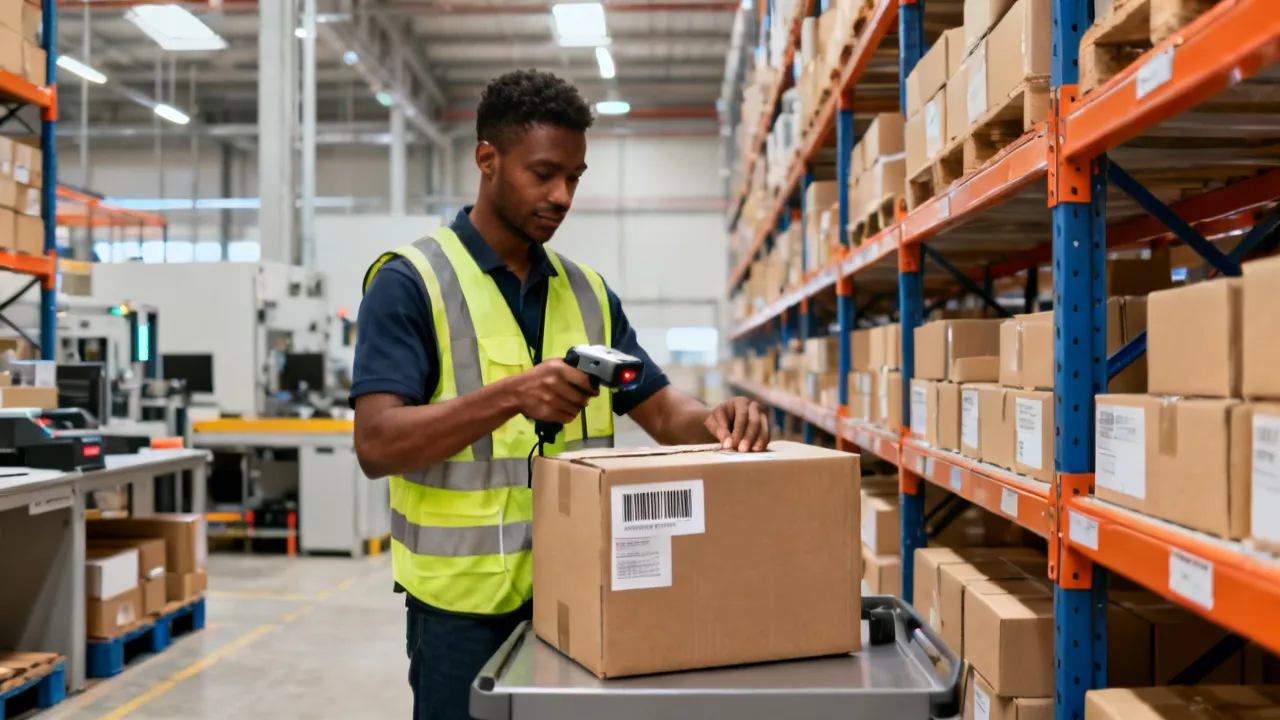
For job seekers searching for warehouse employment, an Indeed pick packer listing can be a useful starting point for understanding available roles, comparing requirements, and identifying employers that need support in distribution or fulfillment operations. The title commonly refers to a worker who selects products from storage locations, verifies order details, packs items for shipment, and prepares completed parcels for dispatch.
The title is not entirely standardized. One employer may use “pick packer” for a position focused primarily on order assembly, while another may combine picking, packing, receiving, stock replenishment, returns processing, and general warehouse duties. A careful review of the complete job description is therefore more informative than relying on the job title alone.
From an industry perspective, the important questions are practical ones: What products will be handled? How is performance measured? Which shifts are available? What equipment is used? Is training provided? Are there lifting, standing, temperature, or scheduling requirements? These details influence whether a role is suitable and whether an applicant can perform consistently and safely.
Key point: An Indeed pick packer search should be treated as a comparison exercise rather than a decision based only on headline wording. Applicants should examine the employer, worksite, responsibilities, employment arrangement, schedule, compensation structure, and stated requirements before applying or accepting an offer.
It is also useful to recognize that pick packer jobs exist in several types of operations. A large e-commerce fulfillment center may process thousands of small orders each day using scanners, conveyor systems, and automated sorting equipment. A food distributor may handle chilled or frozen products under strict date-control procedures. A wholesale warehouse may prepare larger cartons or pallets for business customers. A medical, electronics, or cosmetics facility may place greater emphasis on traceability, product condition, and specialized packaging.
These differences can affect the daily experience considerably. Two listings with the same title may involve different walking distances, order sizes, work speeds, temperatures, and levels of customer or regulatory responsibility. Applicants should therefore compare the operational setting as carefully as they compare the stated pay.
Pick packer work typically follows a sequence that begins when an order is released by a warehouse management system and ends when a correctly packaged shipment reaches the dispatch area. The exact workflow depends on the facility, but several responsibilities appear regularly across distribution, retail, manufacturing, and e-commerce operations.
Picking involves finding the correct items in designated storage locations. A worker may use a printed pick list, handheld scanner, voice-directed system, mobile terminal, or warehouse management software. Accuracy matters because selecting the wrong product can create returns, customer complaints, inventory discrepancies, and additional transportation or labor costs.
Picking methods vary. In a piece-picking operation, an employee selects individual units. Case picking involves moving complete cartons, while pallet picking may require powered industrial equipment. Some warehouses organize work by individual customer orders; others group several orders into a batch to reduce walking distance and improve throughput.
Storage locations may be identified by aisle, bay, shelf, bin, product code, or a combination of identifiers. Employees are often expected to follow a logical route through the facility rather than move randomly between locations. This helps reduce unnecessary travel and supports a consistent workflow. However, efficiency should never replace the required verification step.
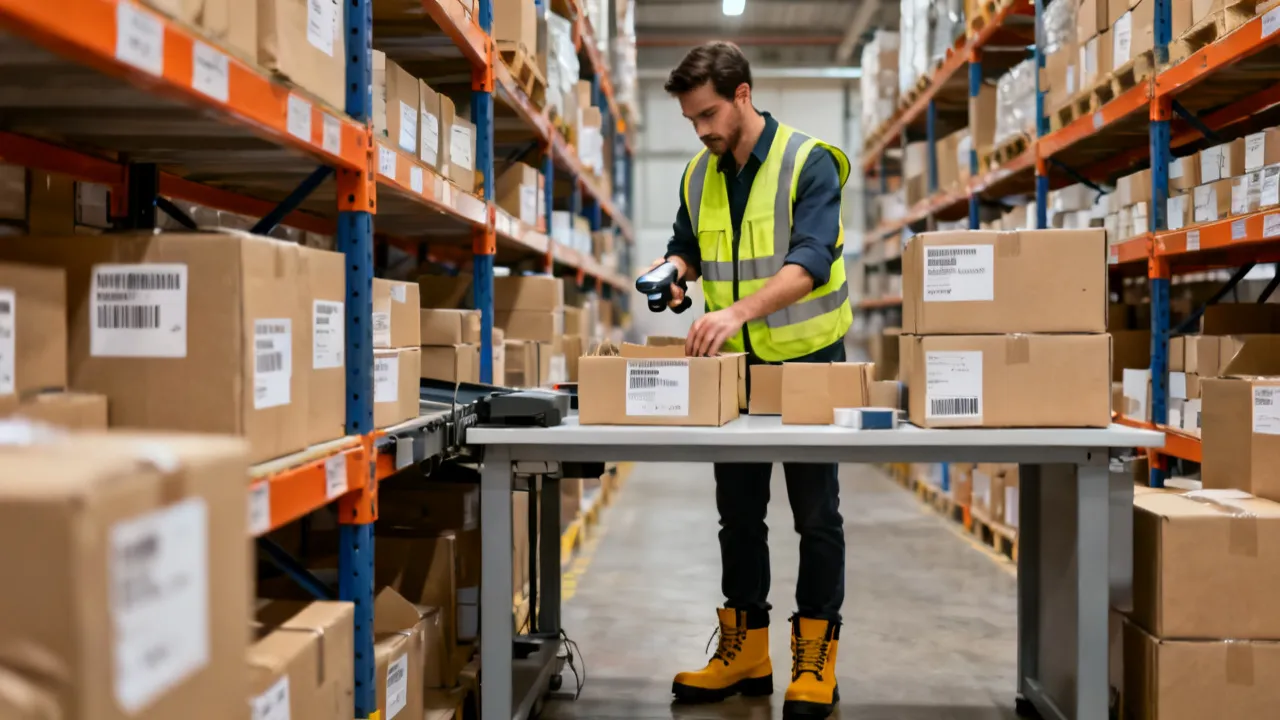
Verification may include checking product codes, quantities, size, color, expiration information, serial numbers, or order-specific instructions. Barcode scanning is common, but workers may also need to compare physical products with system information or printed documentation.
An experienced pick packer does not treat speed as the only objective. Correct verification at the picking stage prevents errors later in packing and dispatch. When information is unclear, the appropriate response is to pause and seek clarification rather than make an assumption.
Verification is particularly important when products look similar. Different versions of an item may have nearly identical packaging but different sizes, specifications, or customer destinations. A reliable worker checks the identifying information at the point required by the employer’s procedure and reports discrepancies instead of silently correcting the order based on guesswork.
Packing involves choosing a suitable carton, mailer, protective material, or specialized container. The worker positions products so that they remain secure during handling and transportation. Depending on the goods, the process may require cushioning, separation, sealing, tamper controls, or specific orientation.
Packaging decisions can influence product protection, shipping cost, storage efficiency, and customer experience. Fragile goods, liquids, electronics, pharmaceuticals, food products, and regulated materials may require procedures that differ substantially from those used for ordinary consumer merchandise.
Packing also includes checking that the carton is neither unnecessarily large nor too small for its contents. Excess space can allow products to move during transit and may increase shipping charges. Insufficient space can lead to crushed packaging, damaged goods, or unsafe sealing. Some facilities provide packaging diagrams, material guides, or system prompts to help employees select the correct method.
A completed parcel may need a shipping label, packing slip, handling mark, route identifier, customs document, or internal tracking label. Workers should confirm that labels correspond to the correct order and remain legible after application.
Some facilities separate packing from labeling, while others assign both activities to one employee. Job seekers should read the listing carefully because the title alone may not reveal how many stages of the process are included in the role.
Documentation can be important for traceability. If a parcel is lost, damaged, returned, or questioned by a customer, the employer may need to determine when the order was picked, packed, labeled, and dispatched. Consistent scanning and documentation help create that record.
After packing, orders are usually placed in a staging area, conveyor stream, cage, pallet, or dispatch lane. The worker may need to sort shipments by carrier, route, service level, department, or collection time. Good housekeeping is important at this stage because misplaced parcels can delay the entire outbound process.
Employees may also be responsible for building stable pallets, applying stretch wrap, separating hazardous or temperature-sensitive items, and ensuring that completed orders do not obstruct walkways or emergency access points. These tasks can appear minor, but they contribute to safe and organized dispatch operations.
Some pick packer positions include cycle counting, replenishing storage locations, unloading deliveries, processing returns, disposing of packaging waste, or reporting damaged products. These duties may be occasional or central to the position. Applicants who prefer variety may value this broader scope, while others may want a more narrowly defined workstation.
Replenishment is especially common in high-volume operations. A pick face must contain enough stock for workers to complete orders without repeated interruptions. Pick packers may move products from reserve storage into active picking locations, rotate stock, and confirm quantities through the warehouse system.
Returns work can involve inspecting packaging, identifying reasons for return, separating resalable and damaged goods, and following instructions for restocking or disposal. Applicants should ask about these duties if the listing refers to “reverse logistics,” “returns processing,” or “general warehouse support.”
Job advertisements often combine essential information with general promotional language. A systematic review helps applicants distinguish concrete conditions from vague descriptions.
| Listing Element | Questions to Consider | Why It Matters |
|---|---|---|
| Job title | Does the role focus on picking, packing, or a wider range of warehouse duties? | Titles differ among employers and may not describe the entire workload. |
| Employment type | Is the position temporary, seasonal, contract-based, part-time, or full-time? | The arrangement affects continuity, benefits, and scheduling expectations. |
| Schedule | Which shifts, days, weekends, overtime periods, or rotating schedules apply? | Warehouse operations may extend beyond standard daytime hours. |
| Physical requirements | How much standing, walking, lifting, bending, or repetitive movement is expected? | Applicants need to assess whether the work is compatible with their capabilities. |
| Equipment | Will the worker use scanners, pallet jacks, forklifts, conveyors, or automated systems? | Equipment may require training, authorization, or prior experience. |
| Performance standards | Are accuracy, productivity, attendance, or quality targets described? | Clear expectations help applicants understand how performance is assessed. |
| Compensation | Is pay stated as an hourly rate, salary, range, differential, or incentive arrangement? | Applicants need complete compensation information before making comparisons. |
| Worksite | Is the facility address clear, and how would commuting work for each shift? | Travel time and transportation availability can affect practical suitability. |
Applicants should pay close attention to words such as “flexible,” “fast-paced,” “must be available,” and “other duties as assigned.” These phrases are not automatically negative, but they may indicate that schedules or responsibilities can change. A flexible schedule could mean the employer accommodates availability, or it could mean that employees are expected to accept short-notice changes. The interview is the appropriate time to clarify the meaning.
Similarly, “fast-paced environment” may refer to a normal high-volume workflow, seasonal peaks, performance targets, or a combination of these. Candidates should ask how many orders or units are normally processed, how work is assigned, and how new employees are introduced to the expected pace.
Many pick packer roles emphasize reliability and attention to detail more than formal academic credentials. However, the required skill profile depends on the facility’s products, technology, safety environment, and level of automation.
Picking and packing errors can occur when similar products are stored near one another, when quantities are easy to confuse, or when labels are applied to the wrong package. Employers therefore value workers who check information methodically and follow established procedures.
Attention to detail also includes noticing damaged shelves, unclear location signs, leaking containers, incorrect stock rotation, or unusual system instructions. Reporting such problems promptly can prevent larger operational failures.
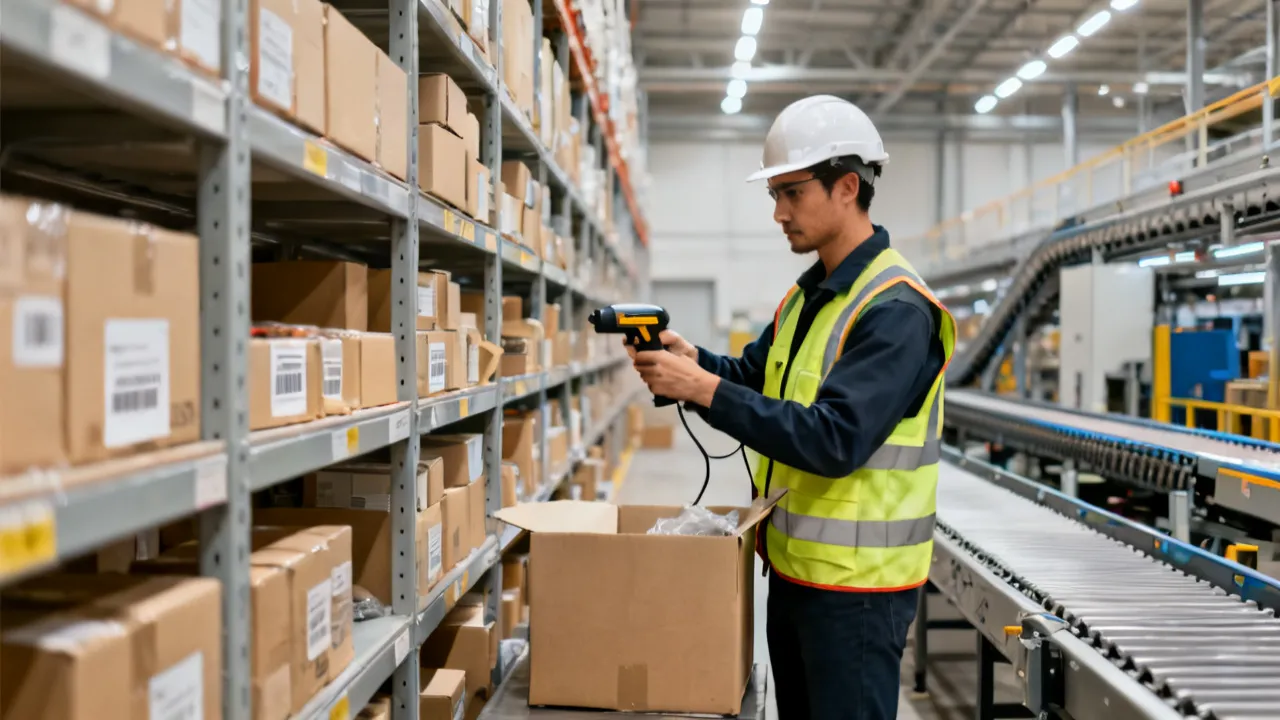
Modern warehouses commonly use handheld scanners, tablets, warehouse management systems, and electronic work instructions. Applicants do not necessarily need advanced technical knowledge, but they should be comfortable reading prompts, entering information, scanning barcodes, and reporting system problems.
Workers may need to log in, select the correct task, scan a location, scan an item, confirm a quantity, print a label, and close the transaction. Small mistakes in this sequence can create inventory or order errors, so willingness to learn the system is important.
A well-organized worker keeps products, paperwork, packaging materials, and completed orders in the correct locations. Organization is particularly important during busy periods, when multiple orders may be processed at the same time.
Good organization also improves efficiency. Preparing commonly used materials, keeping the work area clear, and following the facility’s location system can reduce wasted movement without compromising safety or accuracy.
Pick packer work may involve standing and walking for much of a shift, repeated reaching or bending, and handling cartons of varying sizes. The actual requirements should be taken from the advertisement and confirmed with the employer. Applicants should not assume that every facility has the same lifting limits or ergonomic design.
Physical readiness does not mean ignoring pain or fatigue. Employees should use the equipment and assistance procedures provided by the employer and report problems through the appropriate channel. A safe operation should not depend on workers silently exceeding reasonable limits.
Warehouse operations often depend on coordinated handoffs. A late arrival or unplanned absence can affect receiving, picking, packing, loading, and carrier collection schedules. Employers commonly look for applicants who can follow agreed schedules and communicate promptly when circumstances change.
Pick packers may need to report damaged stock, missing products, scanner problems, unsafe conditions, or unclear instructions. Clear communication reduces errors and supports a safer working environment.
Communication also matters when employees work in teams. A worker may need to tell a colleague that a location is empty, a shipment is urgent, a pallet is incomplete, or a system transaction has not been completed. Brief and accurate updates help prevent duplicated work.
Safety should be evaluated before compensation or convenience because warehouse work can involve moving equipment, vehicle traffic, elevated storage, repetitive tasks, and manual handling. The relevant requirements differ by jurisdiction and workplace, but reputable employers should provide appropriate instruction, supervision, and protective measures.
In the United States, the Occupational Safety and Health Administration, commonly known as OSHA, publishes guidance and standards relevant to warehousing, material handling, walking-working surfaces, hazard communication, and powered industrial trucks. Applicants in other countries should consult the applicable national or regional occupational safety authority.
Safe lifting is not simply a matter of using a particular posture. Load weight, distance from the body, frequency, twisting, floor conditions, carton shape, and available equipment all influence risk. Workers should use approved handling aids and request assistance when the task exceeds the stated procedure or their training.
Applicants should ask whether mechanical aids are available for heavy or awkward loads and whether team lifting is part of the normal process. They should also determine whether the listed lifting requirement applies occasionally or throughout most of the shift.
A listing may mention pallet jacks, forklifts, order pickers, conveyors, or other powered equipment. Operating such equipment may require formal training, authorization, or certification depending on the equipment and local rules. Applicants should never assume that prior experience automatically permits operation at a new site.
Even when a role does not require equipment operation, employees may work near powered vehicles. Awareness of marked pedestrian routes, reversing alarms, loading areas, and restricted zones is therefore important.
Depending on the products and facility, required equipment may include safety footwear, high-visibility clothing, gloves, eye protection, hearing protection, or other controls. The employer should explain what is required, when it must be worn, and how it is maintained.
Cold storage, chilled food, outdoor loading areas, dust-producing materials, chemicals, and strong odors can affect working conditions. The advertisement may not provide complete information, so applicants should ask direct questions about temperature, ventilation, protective equipment, and break arrangements.
Repetitive picking and packing can place stress on the hands, shoulders, back, or lower limbs. A well-managed operation may use adjustable workstations, job rotation, mechanical aids, task variation, and training. During an interview, candidates can ask how the employer manages repetitive work and reports discomfort.
Safety culture can often be assessed by asking how new employees are taught to report hazards or injuries. A responsible employer should be able to explain the reporting route without suggesting that workers should conceal problems to protect productivity figures.
Warehouse performance is often assessed through a combination of accuracy, productivity, quality, attendance, safety behavior, and teamwork. The relative importance of each measure varies by employer and product category.
Productivity may be expressed as units, lines, orders, cartons, or tasks completed during a period. These measures are not directly comparable between facilities because product size, travel distance, system design, order complexity, and packaging requirements differ. A worker picking small standardized items may have a different expected rate from someone handling fragile or bulky products.
Accuracy is especially important in sectors where mistakes have serious consequences. An employer may monitor mis-picks, damaged products, incorrect labels, incomplete orders, or avoidable returns. Applicants should ask whether targets are individual or team-based and how new employees are assessed during training.
One practical question is whether the employer expects immediate full productivity or uses a gradual learning period. Another is how performance data are communicated. Clear feedback allows employees to correct problems before they become formal disciplinary issues.
Applicants should also understand that productivity targets can change during seasonal periods. Holiday demand, promotional events, weather disruptions, and carrier schedules may increase volume temporarily. Asking how the organization handles peak periods can provide useful information about staffing and workload planning.
Training for an Indeed pick packer role may include site orientation, emergency procedures, product knowledge, scanning systems, packing standards, manual handling, equipment use, and quality checks. The duration can range from a brief introduction to a structured program lasting several shifts or longer.
Applicants should look for specific language about training rather than assuming that all instruction will be identical. Useful questions include:
A strong onboarding process supports both safety and accuracy. It also gives the employee a realistic understanding of the pace, workstation design, and communication practices before full responsibility begins.
Training may continue after the first few shifts. Employees can learn additional zones, products, packing methods, returns procedures, or equipment tasks as they demonstrate competence. Applicants interested in longer-term employment may ask whether cross-training is available and how internal progression decisions are made.
A good application should connect the applicant’s previous experience to the actual needs of the warehouse. Direct pick packer experience is useful, but it is not the only relevant background. Retail stockroom work, grocery replenishment, manufacturing, catering logistics, parcel handling, inventory control, and production-line roles may demonstrate transferable abilities.
Use specific descriptions rather than broad claims. Examples include:
A resume should be easy to scan and factually precise. If an applicant has used a forklift, pallet jack, voice-picking system, enterprise resource planning software, or warehouse management system, the resume should name the equipment or system only when the experience is genuine.
Applicants should avoid claiming certifications that have expired or were obtained for a different type of equipment. It is better to state that one is willing to complete required training than to overstate qualifications.
Some pick packer openings involve early mornings, late evenings, weekends, public holidays, rotating shifts, or seasonal increases in workload. Stating realistic availability helps prevent misunderstandings and demonstrates professional judgment.
Online applications may ask about lifting ability, transportation, shift availability, previous warehouse experience, equipment use, or authorization to work. Answers should be accurate and consistent with the resume and interview conversation.
Specific details can make relevant experience easier to understand. For example, an applicant might describe the number of orders handled during a shift, the type of inventory system used, the size of a team, or the responsibility for maintaining an organized stock area. Numbers should be included only when they are accurate and can be explained during an interview.
Interviews for pick packer roles often focus on reliability, safety, accuracy, and practical problem-solving. Candidates do not need to present themselves as warehouse experts if they can explain how they work carefully and respond to operational issues.
A sound response would mention checking the location, product code, description, quantity, and scanner confirmation before moving on. The candidate can also explain that an unclear order should be escalated instead of guessed.
The appropriate process usually involves separating the item, preventing it from entering the order stream, recording or reporting the issue, and following the site’s instructions for replacement or disposal.
A credible answer can refer to maintaining a consistent method, following ergonomic guidance, taking scheduled breaks, monitoring concentration, and communicating discomfort or hazards promptly.
The candidate should explain that they would follow the facility’s contingency procedure, notify the appropriate supervisor or support team, and avoid creating unverified manual records unless instructed.
The strongest response recognizes that speed without accuracy creates rework. A worker should use the approved workflow, reduce unnecessary movement, prepare packaging materials in advance when permitted, and maintain verification at critical control points.
A useful answer should be honest but constructive. The candidate can describe how the mistake was identified, reported, corrected, and prevented from recurring. Employers often value accountability and learning more than an unrealistic claim of never making an error.
A strong response can connect the applicant’s interest to dependable work, practical operations, teamwork, logistics, learning new systems, or the employer’s products and service. It should avoid suggesting that the applicant has not read the advertisement or is applying without regard to the actual duties.
An interview is also an opportunity to determine whether the role matches the applicant’s expectations. Questions should be specific and practical.
These questions help reveal whether the listing accurately reflects the position. They also signal that the applicant is thinking about safety, performance, and good suitability rather than focusing only on obtaining an offer.
Applicants may wish to ask whether the role is normally assigned to one department or whether workers move between areas. Rotation can provide variety and learning opportunities, but it may also mean different physical demands and changing productivity standards. Understanding this in advance helps applicants prepare realistically.
Compensation for pick packer work depends on factors such as region, labor market, experience, shift, product category, employment arrangement, and the complexity of the facility. Because listings change and employers structure compensation differently, applicants should rely on the specific advertisement and written offer rather than general assumptions.
A compensation review should include more than the headline hourly rate. Consider whether the stated amount includes a shift differential, attendance incentive, productivity incentive, temporary premium, or other condition. Confirm which elements are guaranteed and which depend on eligibility or performance.
Benefits may vary according to employment status and local law. Possible terms include paid leave, health coverage, retirement arrangements, insurance, employee assistance programs, transportation support, or access to training. These should be reviewed in official employer documentation.
Applicants should also clarify payroll frequency, probationary conditions, overtime treatment, deductions, uniform requirements, parking arrangements, and whether the position is directly with the warehouse operator or through a staffing agency. None of these details should be inferred from the job title.
When comparing pay, applicants should consider the complete practical value of an offer. A slightly higher hourly rate may not compensate for an unreliable commute, unpredictable schedule, unpaid required preparation time, or significantly greater physical demands. Conversely, a role with structured training, stable hours, and a shorter commute may be more sustainable even if the headline rate is not the highest.
Online job boards can contain useful opportunities, but applicants should evaluate each posting critically. A credible advertisement normally identifies the employer or staffing organization, describes the worksite or general area, explains core duties, states a realistic employment arrangement, and provides a professional application process.
Warning signs may include a lack of meaningful job duties, pressure to make immediate decisions, requests for sensitive financial information before a formal hiring process, inconsistent employer details, or promises that appear disproportionate to the responsibilities described. Applicants should verify the organization through reliable sources and communicate through appropriate professional channels.
It is also wise to check the posting date and whether the listing appears duplicated across unrelated employers. A job board listing is not the same as a binding employment agreement. Final terms should be confirmed in writing by the employer or authorized staffing provider.
Applicants should be cautious if a recruiter asks for payment to obtain an interview, equipment, training, or a guaranteed position. Legitimate hiring processes may require ordinary onboarding documentation, but applicants should understand why information is requested and who will receive it. When in doubt, verify the recruiter independently through the organization’s official contact details.
The following framework can help applicants compare several Indeed pick packer opportunities without relying on a single feature.
| Comparison Area | What to Record | Practical Interpretation |
|---|---|---|
| Work pattern | Days, hours, weekends, rotating shifts, and overtime expectations | Compare the schedule with transportation, family, education, and rest needs. |
| Task mix | Picking, packing, receiving, replenishment, returns, and loading | A broader role may offer variety but can involve more physical and operational demands. |
| Technology | Scanners, voice systems, conveyors, automation, and inventory software | Technology can support accuracy while requiring consistent system use. |
| Physical environment | Temperature, noise, walking distance, lifting, and workstation design | These conditions should be considered alongside the advertised duties. |
| Training | Orientation, supervised practice, equipment instruction, and progression | Structured training may improve safety and early performance. |
| Compensation structure | Base pay, differentials, incentives, overtime, and benefits | Separate guaranteed compensation from conditional payments. |
| Employment pathway | Direct hire, agency assignment, temporary work, or permanent placement | The pathway affects continuity, benefits, and who manages employment terms. |
| Commute | Distance, transportation options, parking, and shift compatibility | A role may be less practical if the commute is unreliable at the required hours. |
Applicants can create a simple comparison document for each listing. Recording the employer, location, pay, shift, duties, physical requirements, training, and unanswered questions makes it easier to identify differences that are easy to overlook when viewing several advertisements online.
During the first week, new employees should focus on learning location systems, scanning sequences, packing rules, safety routes, escalation procedures, and break arrangements. It is normal to work more slowly while learning, provided the employee remains engaged and receptive to feedback. Trying to appear fast by skipping checks can create avoidable errors and damage trust.
Before accepting a position, applicants should confirm the following conditions in a direct and professional conversation with the hiring organization:
These checks are not signs of hesitation. They are part of responsible employment decision-making and can prevent avoidable disputes after the start date.
Applicants should also confirm whether work clothing or safety footwear must be purchased before the first shift, whether lockers are available, where employees park or enter the site, and whether public transportation operates during the required hours. These practical issues can affect punctuality and the actual cost of accepting the job.
Pick packer work can provide practical exposure to inventory, dispatch, warehouse systems, and operational discipline. Career progression is not automatic, but employees who develop accuracy, equipment knowledge, communication skills, and leadership habits may become eligible for broader responsibilities.
Potential directions include inventory clerk, quality assistant, receiving coordinator, dispatch administrator, equipment operator, team lead, warehouse coordinator, or supervisor. In larger facilities, employees may also move toward process improvement, training, workforce planning, or transportation coordination.
Progression usually depends on the employer’s structure, performance record, attendance, safety behavior, demonstrated competence, and available openings. Workers can support their development by learning the inventory system, understanding quality controls, documenting achievements, and asking about internal training.
Industry credentials may be useful, but their value depends on the intended role and local requirements. Forklift or powered equipment training, workplace safety instruction, inventory software experience, and basic spreadsheet skills can be relevant in many operations. Candidates should select training that is recognized by the employer or applicable authority rather than collecting credentials without a clear purpose.
Employees seeking advancement can also develop problem-solving skills. Learning why orders are delayed, how stock discrepancies arise, and how dispatch priorities are managed may help a worker move toward coordination or supervisory work. Professional conduct remains important: arriving on time, following procedures, supporting colleagues, and communicating respectfully are often considered when internal opportunities become available.
From an industry expert’s perspective, the strongest pick packer is not necessarily the person who moves fastest during the first shift. Sustainable performance comes from repeatable accuracy, safe movement, good judgment, and the ability to communicate exceptions. A worker who consistently prevents errors can contribute more value than one who produces high speed but requires frequent corrections.
Warehouse operations are interconnected. A picking error may become a packing problem, a dispatch delay, a customer service case, an inventory adjustment, and a return. For this reason, workers should understand where their task fits within the wider flow. The objective is not merely to move a product from a shelf into a carton; it is to complete an order correctly and traceably.
Another important insight concerns process discipline. Established scanning, labeling, and quality procedures may appear repetitive, but they exist to control variation. Employees should learn the reason behind each control and report recurring obstacles. Constructive feedback can help managers identify poor slotting, unclear labels, damaged shelving, inadequate packaging supplies, or system issues.
Finally, applicants should evaluate management practices. A professional operation should be able to explain expectations, training, safety reporting, and performance feedback. Clear communication at the hiring stage often indicates how seriously the employer treats employee support and operational consistency.
Warehouse performance is also influenced by layout and planning. If workers must walk long distances for packaging materials, repeatedly search for products, or work around blocked aisles, productivity and safety may suffer. Employees are not expected to redesign the facility, but they can provide useful observations through the proper reporting process. People who notice operational patterns and communicate them constructively may demonstrate potential for future improvement-focused roles.
Some candidates focus on the job title and overlook the required hours. This can lead to missed interviews, attendance problems, or early resignation. Applicants should confirm that they can reliably reach the worksite for every required shift.
A small fulfillment center, a food distribution warehouse, a retail stock operation, and a manufacturing dispatch area may have very different conditions. Product sensitivity, temperature, equipment, walking distance, and order complexity can vary substantially.
Claiming experience with equipment that the applicant has not used creates safety and credibility risks. Employers may assess competence directly, and inaccurate statements can affect future opportunities.
Applications that mention only speed may appear incomplete. Employers generally need workers who can maintain accuracy, follow procedures, and report hazards as well as complete tasks efficiently.
Temporary agency work, seasonal employment, contract assignments, and direct employment can have different terms. Candidates should ask who the legal employer is, how scheduling is managed, and what happens when the assignment ends.
Statements such as “I work hard” or “I am a team player” are more convincing when supported by an example. Candidates should briefly describe the situation, the action they took, and the result. The example does not need to come from a warehouse if it demonstrates relevant judgment, reliability, organization, or communication.
An Indeed pick packer generally selects products for customer or business orders, verifies quantities and item information, packs products, applies labels, and transfers completed shipments to the appropriate dispatch area. Some employers also include replenishment, inventory counting, returns, receiving, or loading duties.
Not always. Some employers hire applicants with limited direct experience and provide instruction on scanners, packing methods, safety, and site procedures. Previous work involving stock handling, retail, manufacturing, logistics, or repetitive quality-controlled tasks can strengthen an application.
Requirements vary. Many postings emphasize dependable attendance, the ability to follow instructions, attention to detail, and physical readiness for the stated duties. Equipment operation, specific certifications, work authorization, or prior warehouse system experience may be required for certain positions.
It can be. The demands may include standing, walking, bending, reaching, repetitive movements, and handling cartons. The level depends on product size, equipment, workstation design, and workflow. Applicants should review the stated physical requirements and ask the employer for clarification.
Many facilities use barcode scanners, mobile terminals, voice-directed systems, automated conveyors, or warehouse management software. The technology may be simple or highly integrated. Basic comfort with electronic instructions and accurate data entry is often useful.
Employers may consider order accuracy, productivity, quality, attendance, safety behavior, and teamwork. The specific measures and targets differ by facility. Candidates should ask whether expectations are individual or team-based and how performance is reviewed during training.
Include relevant experience with order selection, packing, inventory, scanning, stock replenishment, dispatch preparation, quality checks, or safe material handling. Mention genuine equipment experience and describe achievements factually without inflating responsibilities.
Potentially. Depending on the employer, experienced workers may progress into inventory, receiving, dispatch coordination, equipment operation, quality, training, team leadership, or supervision. Advancement depends on performance, competence, available positions, and the organization’s development practices.
Ask about the exact duties, shift pattern, employment status, worksite, physical conditions, training, equipment, performance measures, compensation structure, benefits, and start-date requirements. Request the final terms in writing and review them carefully.
Look for missing employer information, vague duties, inconsistent contact details, pressure to provide sensitive information prematurely, or compensation claims that are not explained. Verify the organization and confirm important terms through an appropriate professional hiring channel.
It can be. Warehouse work may provide an entry point into logistics and supply chain operations while allowing applicants to build experience with inventory systems, dispatch procedures, quality controls, and workplace technology. Candidates should present transferable skills honestly and show willingness to learn the employer’s process.
A picker usually focuses on locating and selecting products, while a packer concentrates on preparing orders for shipment. A pick packer commonly performs both functions, although the exact division varies by facility. Some employers use the terms interchangeably, so the complete duty list remains the best source of information.
An Indeed pick packer search can introduce applicants to a wide range of warehouse and fulfillment opportunities, but the job title provides only a starting point. The most important decision comes from examining the actual workflow, schedule, physical requirements, technology, training, safety practices, employment arrangement, and compensation terms.
Applicants can improve their prospects by presenting accurate experience, emphasizing reliability and attention to detail, preparing practical interview questions, and verifying the final offer in writing. From an operational standpoint, effective pick packing depends on a balance of accuracy, safe work, steady productivity, and clear communication. Those principles provide a sound basis for evaluating both the application process and the role itself.
A thoughtful applicant does not need to know every warehouse system before applying. What matters is the ability to follow instructions, learn procedures, protect product quality, communicate problems, and work consistently within the stated schedule. By comparing listings carefully and asking direct questions, job seekers can make more informed choices and identify opportunities that match both their immediate needs and longer-term career goals.
Reference perspective: Safety considerations in this guide are consistent with the type of warehouse and material-handling guidance published by occupational safety authorities such as the U.S. Occupational Safety and Health Administration. Applicants should consult the safety regulator and employment rules applicable to their own jurisdiction.
Striking the Perfect Balance: Navigating Premiums and Out-of-Pocket Expenses in Senior Insurance Plans

Explore the Tranquil Bliss of Idyllic Rural Retreats

How to Make Lasting Memories at Disneyland Attractions

Affordable Phones and Plans for Seniors

Affordable Full Mouth Dental Implants Near You

Unlock the Top Kept Secrets to Finding Your Ideal Dentist for Flawless Dental Implant Results!

Discovering Springdale Estates

Unveiling RS Sul Telecom Services

The Guide to Car Trading


Understanding Indeed Pick Packer Jobs
This guide explains how to evaluate an Indeed Pick Packer job, including daily duties, warehouse expectations, essential skills, pay and schedule questions, application strategies, and workplace safety considerations. A pick packer typically selects products, checks order accuracy, prepares parcels, and records inventory movements. The role supports efficient fulfillment across retail, manufacturing, logistics, and e-commerce operations, with requirements varying by employer, facility, shift, and local labor regulations.

Indeed Pick Packer Jobs: A Practical Career Guide
This guide explains how to evaluate Indeed Pick Packer vacancies, understand daily warehouse duties, compare employment conditions, and prepare a strong application. A pick packer selects products, checks order accuracy, packs shipments, and helps maintain efficient inventory flow. The role can suit entry-level applicants, although employers commonly assess reliability, physical readiness, attention to detail, safe work practices, and the ability to use warehouse technology.
Indeed Pick Packer Jobs: A Practical Career Guide
This guide explains how to evaluate an Indeed Pick Packer listing, understand daily warehouse duties, compare employment conditions, and prepare a stronger application. Pick packers retrieve products, verify orders, package goods, and support accurate dispatch in warehouses, distribution centers, and retail supply chains. The role may suit candidates seeking structured, hands-on work, although schedules, physical demands, training, pay, and progression vary by employer and location.

Indeed Pick Packer Jobs: A Practical Career Guide
This guide explains how to evaluate Indeed Pick Packer vacancies, understand daily warehouse duties, prepare a strong application, and assess pay, schedules, safety, and workplace conditions. A pick packer selects products, checks order accuracy, packs goods, and prepares shipments for dispatch. The role appears across retail, logistics, manufacturing, grocery, and e-commerce operations, with requirements varying by employer, location, equipment, and shift pattern.
Indeed Pick Packer Jobs: A Practical Career Guide
This guide explains how to evaluate and apply for an Indeed Pick Packer job, including daily duties, essential skills, workplace expectations, pay considerations, safety requirements, and interview preparation. A pick packer typically retrieves products from warehouse locations, checks order accuracy, packages goods, and prepares shipments. Job conditions vary by employer, facility, shift, equipment, and experience, so applicants should review each listing carefully before applying.
Indeed Pick Packer Jobs: A Practical Guide
This guide explains how to evaluate Indeed pick packer listings, understand daily warehouse duties, prepare a strong application, and assess safety, scheduling, pay, and advancement information. Pick packer roles generally combine order picking, item verification, packing, labeling, inventory handling, and shipment preparation. Requirements differ by employer, facility, equipment, shift, and product type, so applicants should review each posting carefully and confirm important details directly with the hiring organization.